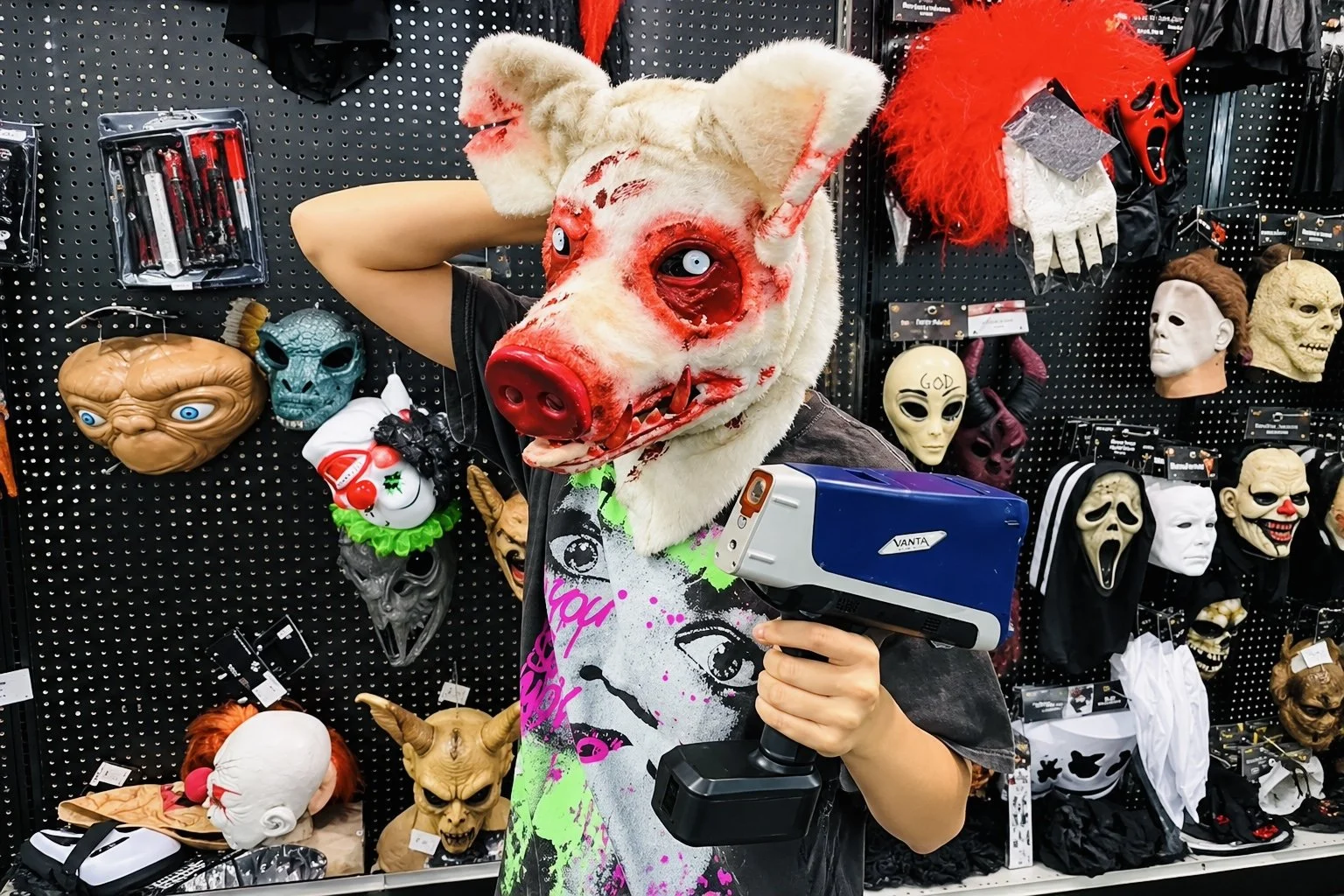
I spent an entire day at Spirit Halloween with my XRF analyzer testing just about everything I could get my hands on.
Masks. Costumes. Props. Toys. Jewelry. Ceramics. Accessories. Plastics. Painted surfaces. Metal components.
If I could test it, I did.
Why Spirit Halloween?
Lead and other heavy metals have turned up in Halloween products repeatedly over the years.
The U.S. Consumer Product Safety Commission has documented excessive lead in Halloween products including children's masks, plastic trick-or-treat pails, Halloween pens and other painted products. In 2009, approximately 8,400 skull-and-crossbones necklaces sold at Spirit Halloween and Spencer Gifts were recalled because they contained high levels of lead.
More recently, the Center for Environmental Health reported finding lead, cadmium and BPA in costume pieces purchased from Spirit Halloween and Halloween Express at levels that would have required warnings under California's Proposition 65.
And in 2024, BAN Toxics purchased six Halloween masks and tested them using a Vanta handheld XRF analyzer. They found lead concentrations as high as 1,130 ppm and cadmium as high as 160 ppm.
Other recent Halloween mask reports have been even more extreme, including electronic components containing lead concentrations in the tens of percent.
So naturally, I brought my XRF.
How I tested
I used my 2026 Evident Vanta handheld XRF analyzer, a professional instrument that uses X-ray fluorescence to identify and quantify elements in materials.
I used the instrument's RoHS settings and spent essentially the entire day working my way through the store.
I tested masks, costumes, props, toys, jewelry, plastics, painted surfaces, metals and individual components whenever possible.
I tested virtually every item in the store.
What did I find?
Surprisingly, almost nothing!
I did not detect meaningful lead in any of the products I screened.
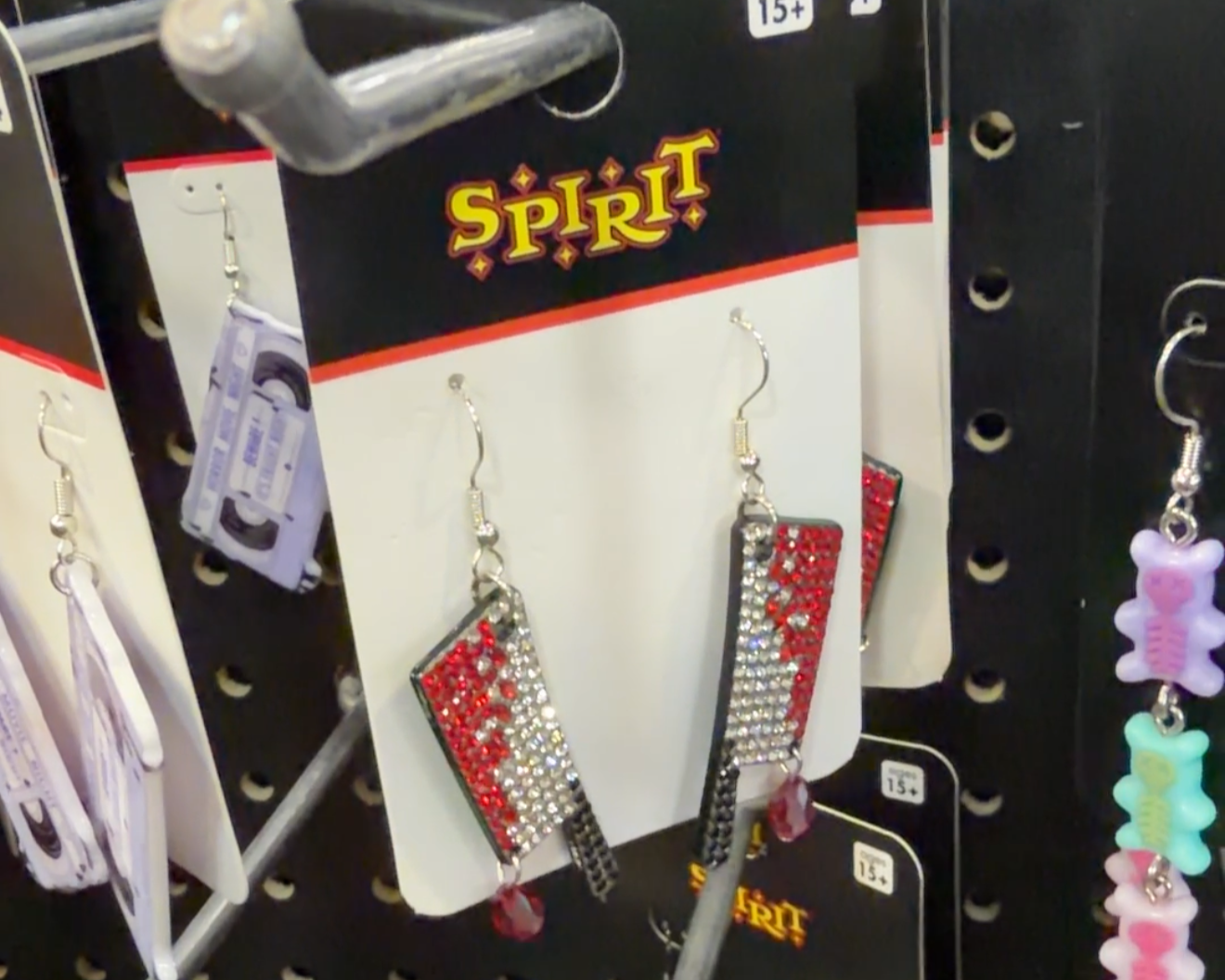
The one significant finding was a pair of rhinestone earrings. Several of the rhinestones repeatedly measured approximately 900–1,000 ppm cadmium.
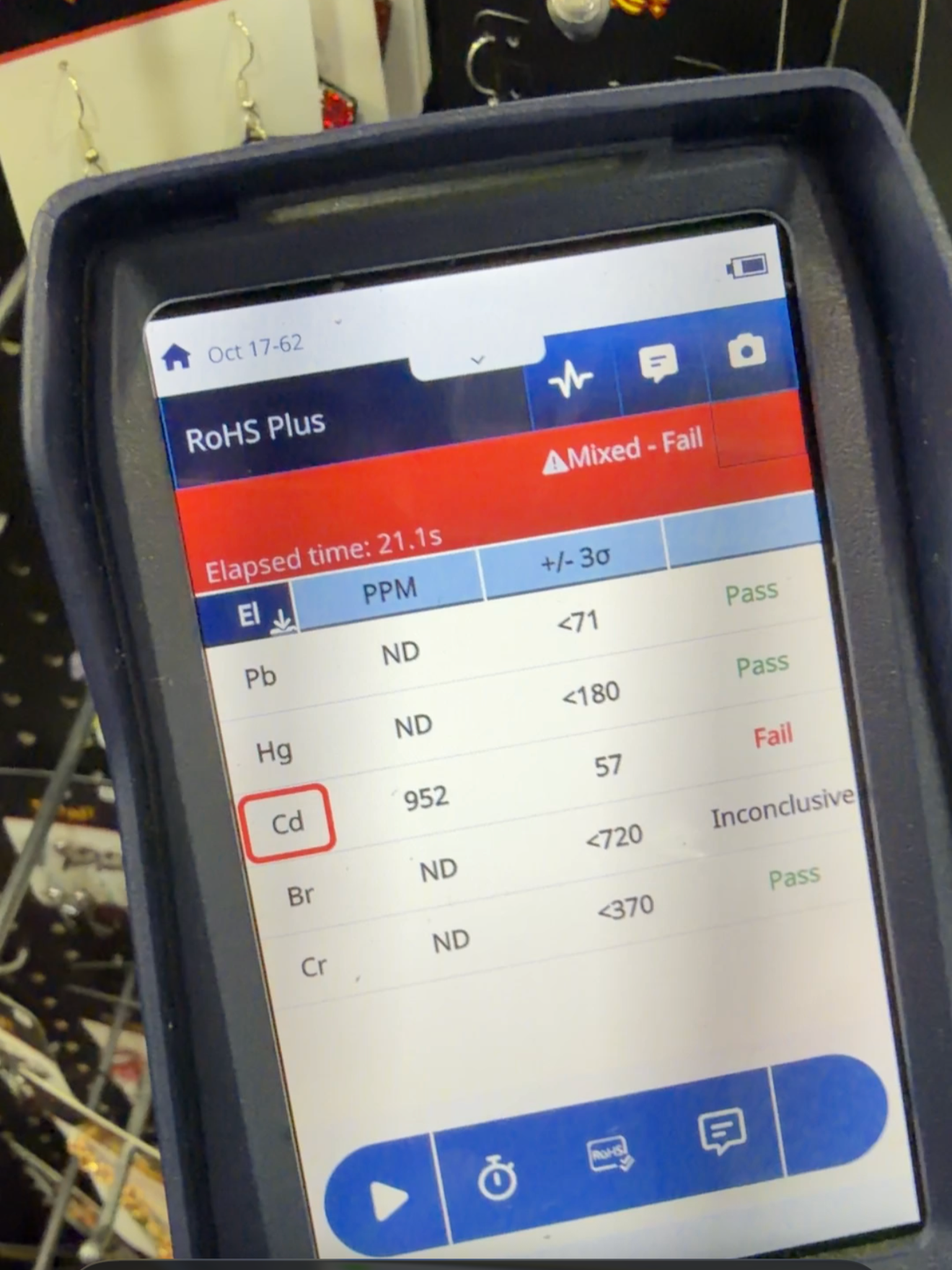
Spirit Halloween Earings found to have between 900-1000 PPM Cadmium.
Cadmium is a toxic heavy metal that can accumulate in the body and damage the kidneys and bones. It is also classified as a human carcinogen.
Cadmium is regulated in children's toys, although federal limits are based on how much cadmium can migrate out of a material rather than the total concentration measured by XRF. So my XRF results alone cannot establish whether these earrings violate a federal standard.
What caught my attention was the size of the earings: they were small enough to fit entirely inside a child's mouth. That's particularly relevant because mouthing and swallowing small components are important potential routes of cadmium exposure from children's products.
The takeaway
I went into Spirit Halloween expecting to find more.
There's plenty of precedent for it. Lead and other heavy metals have been documented in Halloween masks, costumes, jewelry, trick-or-treat pails, accessories and decorations—including products sold at Spirit Halloween itself.
But after spending an entire day actively looking, the cadmium-containing rhinestones were my only significant heavy-metal finding.
These results represent the specific products and components I tested at this Spirit Halloween in 2026. But as a snapshot of what was actually sitting on the shelves?
I was pleasantly surprised.
Happy Halloween 🎃
Learn more about lead exposure and how you can protect your family:

Protecting your child from lead starts with knowing where to look.
We teach our children to swim before they fall into a pool. We learn CPR hoping we’ll never have to use it. We install car seats, baby gates and outlet covers because when the consequences can be permanent, prevention matters.
Lead deserves the same approach.
Lead exposure can come from paint and dust, drinking water, soil, food, dishes and cookware, toys, consumer products, renovations, hobbies, and other parts of a child’s environment.
And the stakes are high. Even low levels of lead exposure are associated with effects on a child’s developing brain, including lower IQ and problems with attention, learning and behavior. The neurological damage caused by lead is permanent.
That’s why I created The Lead Lady’s Complete Lead Safety Guide.
I’ve taken everything I’ve learned through years of research, testing, and my own experience as a parent and organized it into one comprehensive, practical system designed to help you understand where lead exposure can happen, investigate your own environment, interpret what you find, and know what deserves your attention.
Inside the 130-page guide:
The Complete Home Lead Audit — a step-by-step process for investigating potential lead sources throughout your home
How to test your own home and belongings — including which testing methods to use, their limitations, and how to interpret your results
Food — how to understand lead levels, serving sizes, and what the numbers actually mean for your child
Drinking water — where lead comes from, how to test, understand your results, and reduce exposure
Cookware and dishes — what to know about ceramics, glazes, glass, metals, and other materials
Toys and consumer products — where lead can show up and how to evaluate the things your family uses every day
How to prioritize potential sources so you can focus your time and energy where they matter most
Practical ways to reduce exposure throughout your child’s environment
My Home Lead Investigation Assistant — a tool that researches your specific property and surrounding area using public records, environmental databases, historical information, water-system data, and public-health information to uncover potential lead concerns specific to where you live
You can’t prevent what you don’t know to look for. This guide gives you the knowledge and tools to find potential sources of lead exposure and take action before exposure happens.
Your child only gets one brain. When the effects are permanent, prevention matters.
Learn this stuff once. Learn it well. Then live your life. ❤️
*Includes my 2026 Baby Bottle Report